
Industries · Nuclear
Cooling Towers for Nuclear Power Plants
Induced draft FRP, RCC and wooden cooling towers for auxiliary and conventional-side cooling at nuclear power stations and research facilities. Built to CTI standards since 1975.
- Auxiliary cooling duty
- Built to CTI standards
- CTI member · ISO 9001:2015
- 4,900+ towers supplied
Quick answer
What cooling towers are used at nuclear power plants?
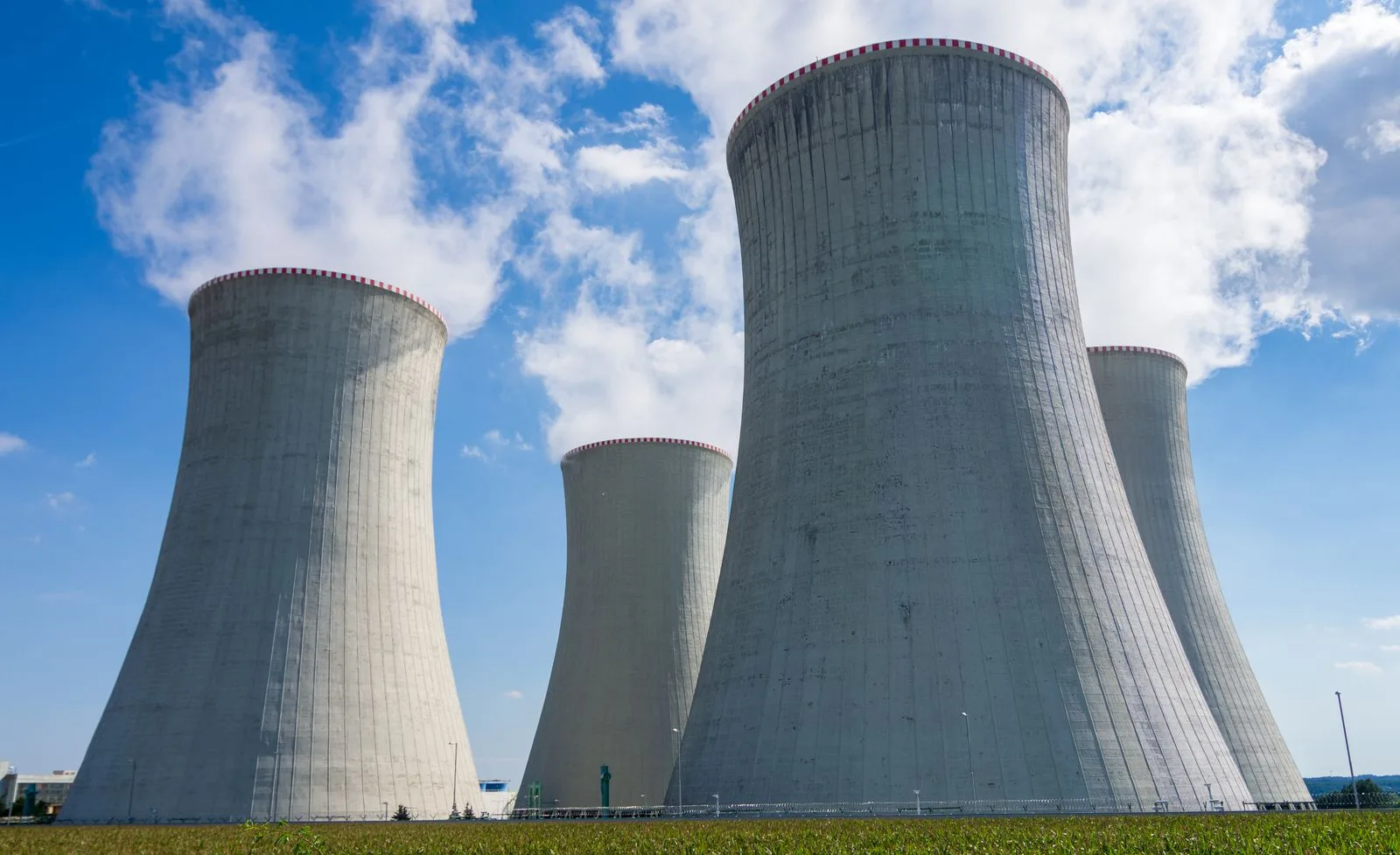
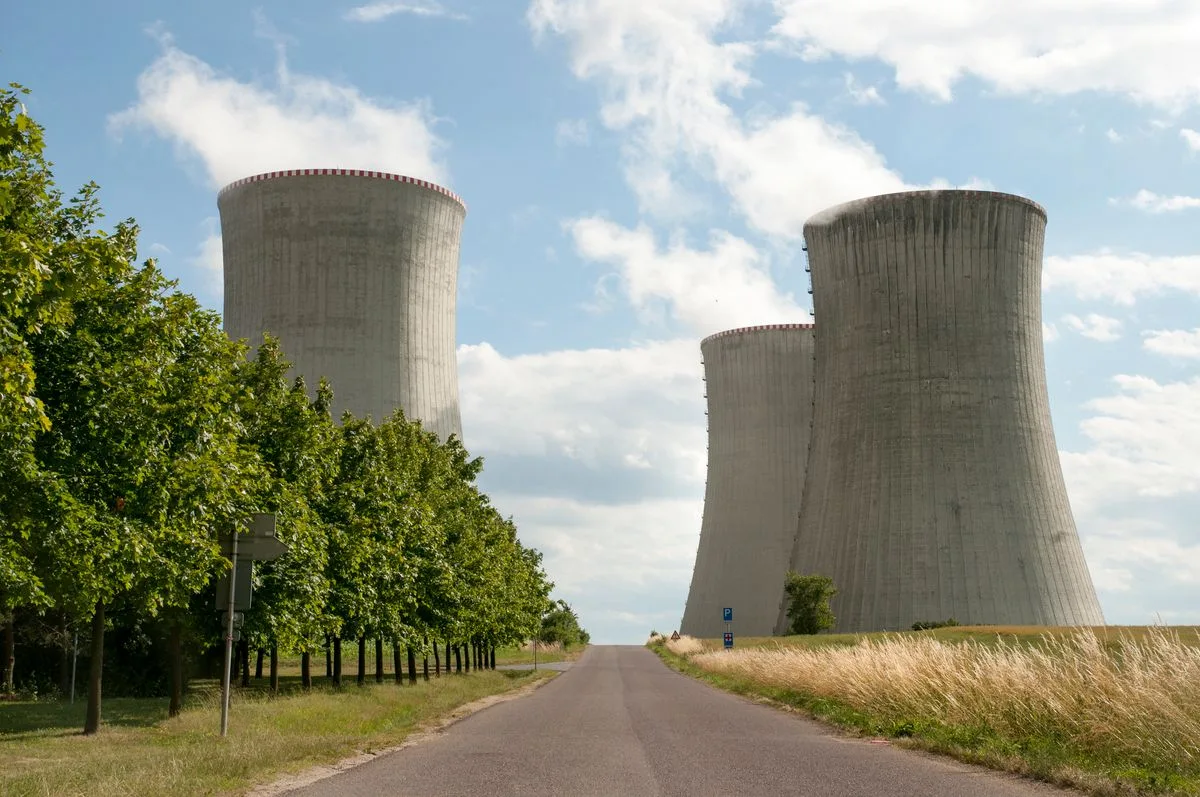
The giant hyperbolic towers seen at many nuclear stations are natural draft cooling towers that cool the main turbine condenser. Alongside them, nuclear plants use many smaller induced draft cooling towers for auxiliary systems such as equipment cooling, HVAC chillers, turbine auxiliaries and on-site workshops.
Cooltech designs and builds induced draft FRP, RCC and wooden cooling towers for these duties, built to CTI standards and supplied with thermal design data.
Applications
Where induced draft cooling towers are used at nuclear plants
Beyond the main condenser, a nuclear station has many auxiliary systems that each need a reliable supply of cooling water.
Auxiliary equipment cooling
Cools heat exchangers that serve pumps, motors and other plant equipment.
Turbine auxiliaries
Cools lube oil, generator and seal oil coolers on the conventional side of the plant.
HVAC chiller condensers
Condenser water for chillers serving control buildings, offices and support facilities.
Research reactors and laboratories
Cooling water for research facilities, test loops and laboratories.
Workshops and support facilities
Cools compressors and workshop equipment around the site.
Standby and construction power
Cooling for DG sets and temporary plant during construction and outages.
Challenges
Cooling tower challenges at nuclear sites, and how we design for them
Nuclear sites expect long life, high reliability and thorough documentation. These are the conditions we design around.
Challenge
Strict quality and documentation
How we design for it
Towers designed and built to CTI standards, with drawings and thermal design data for review.
Challenge
Long design life
How we design for it
Long-life RCC structures, or FRP that cannot rust, with a life expectancy of 15–20 years.
Challenge
High reliability
How we design for it
Multi-cell designs so a cell can be maintained while the others keep running.
Challenge
Coastal locations
How we design for it
Corrosion-resistant FRP and stainless steel or hot-dip galvanised hardware for salt-laden air.
Challenge
Drift control
How we design for it
PVC cellular or blade-type drift eliminators to limit water carried out of the tower.
Challenge
Many duties on one site
How we design for it
Towers of different sizes and materials for each auxiliary duty, from one manufacturer.
Tower types & materials
Which cooling tower suits your auxiliary duty?
We manufacture all three materials in-house, so we recommend the one that fits your duty, not the one we happen to make.
| Feature | RCC cooling tower | FRP cooling tower | Wooden cooling tower |
|---|---|---|---|
| Best for | Large, permanent auxiliary duties | Corrosion-resistant and coastal duties | Economical large-flow cooling |
| Corrosion resistance | Very good – concrete structure with HDG / SS hardware | Excellent – no rust; suits chemical, coastal and seawater duty | Good – CCA-treated timber with HDG / SS hardware |
| Models | 92 | 98 | 107 |
| Capacity | Sized to project | Up to 6,000 m³/hr per cell (pultruded) | 45 – 5,000 m³/hr per cell |
| Civil work | Civil structure built locally from our drawings | Minimal – FRP or RCC cold water basin | RCC cold water basin by purchaser (drawings provided) |
Materials are confirmed against your specification, water analysis and site conditions.
| Component | Material of construction |
|---|---|
| Structure and casing | RCC, FRP or treated timber |
| Fill | PVC film or splash fill |
| Drift eliminator | PVC, cellular or blade type |
| Nozzles | Polypropylene (PP) |
| Hardware | Stainless steel or hot-dip galvanised MS |
| Fan | Cast aluminium alloy or GRP blades |
| Fan cylinder | FRP |
| Electric motor | To suit your site standards and area classification |
How it works
What we need to size your cooling tower
Send these details and our engineers will recommend the model, number of cells and fill for guaranteed performance.
Flow rate
Circulating water flow in m³/hr, or heat load in kW or TR.
Temperatures
Hot water inlet and required cold water outlet temperatures.
Wet-bulb temperature
Design wet-bulb temperature for your site location.
Specification
Applicable specifications, water analysis and quality requirements.
Site details
Available space, existing basin, power supply and site standards.
Why Cooltech
Five decades of cooling tower engineering
Since 1975 we have manufactured more than 4,900 cooling towers for power, process and engineering plants. Our clients include Bharat Heavy Electricals Ltd and Kenya Electricity Generating Company.
years designing cooling towers
cooling towers manufactured
towers exported
member · ISO 9001:2015
FAQ
Cooling towers for nuclear power plants: FAQs
What type of cooling tower does a nuclear power plant use?
The main condenser is usually cooled by large natural draft hyperbolic towers or by once-through seawater. Auxiliary systems such as equipment cooling, chillers and turbine auxiliaries use smaller induced draft cooling towers.
Do you supply cooling towers for auxiliary systems?
Yes. We design induced draft FRP, RCC and wooden cooling towers for auxiliary and conventional-side cooling duties, built to CTI standards.
What is the difference between natural draft and induced draft towers?
A natural draft tower uses the height of a hyperbolic shell to draw air through by buoyancy, with no fans. An induced draft tower uses fans to pull air through, so it is much smaller and its performance is easier to control. Read more about natural draft cooling towers.
Why are nuclear power plant cooling towers so large?
Nuclear units are large, so their condensers reject huge amounts of heat. Natural draft towers need a tall shell to create enough airflow without fans, which is why they are so visible.
What documentation do you provide?
For large cooling towers we provide thermal data such as air quantity, L/G ratio, KaV/L, fan curves and performance curves, along with drawings.
Can you repair existing cooling towers at a power station?
Yes. We repair and reconstruct cooling towers of any make, and supply spares such as FRP fans, fills, nozzles, drift eliminators, fan stacks and gearboxes.
Related industries
Cooling towers for related industries
Cooling towers for captive power generation
Cooling towers for defence
Cooling towers for heavy engineering
Our clients
Clients who trust Cooltech
Industry leaders in India and abroad rely on Cooltech cooling towers.


Need an auxiliary cooling tower for your plant?
Share your flow rate, temperatures and site details. Our engineers will recommend the right FRP, RCC or wooden cooling tower.