When an industrial facility is being outfitted by you, the intense heat generated by heavy machinery must be managed. This is often seen as a highly critical challenge. The right heat rejection equipment must be chosen to ensure effective temperature regulation. Think of your facility like a car engine; if the heat isn’t effectively vented, a complete breakdown is almost guaranteed to happen.
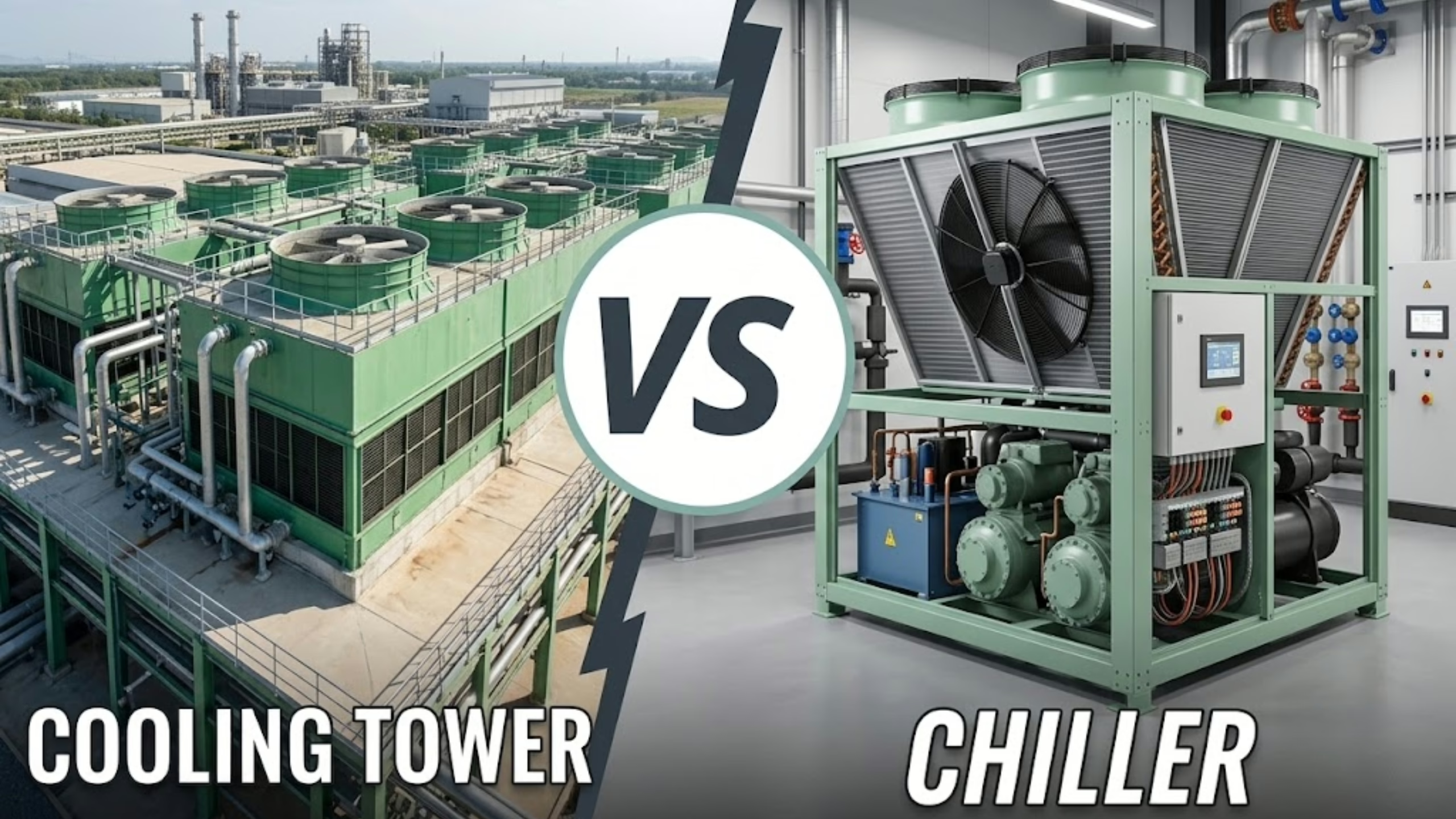
Usually, the difference between cooling towers and chillers is evaluated by facility managers before a decision is made. While heat is removed by both systems, entirely different thermodynamic mechanisms, physical footprints, and financial structures are utilized by them. If the wrong equipment is selected without your unique operational needs being evaluated, poor performance and accelerated equipment degradation can be experienced.
In this guide, the fundamental differences, applications, and variations of chillers and cooling towers will be dissected by me, so an informed investment can be made by you.
What is a Chiller?
A chiller is known as a sophisticated mechanical refrigeration system. Liquids are cooled by it through the removal of heat from a process fluid. A closed-loop vapor-compression or absorption refrigeration cycle is operated via this system.
Inside a chiller, a chemical refrigerant is circulated through a closed circuit. Heat is absorbed from the facility’s internal coolant water and is discharged outward by the system. Because this closed-loop cycle is utilized, pinpoint temperature control is offered. In specialized applications, fluid temperatures can easily be brought down to 2°C by chillers.
Chillers are Best Used For:
Because strict temperature regulation is required, chillers are preferred by:
- Plastics injection molding plants
- Medical imaging centers
- Pharmaceutical manufacturing facilities
- Microbreweries
What is a Cooling Tower?
Conversely, waste heat is removed by a cooling tower from a process system primarily through the natural process of evaporation. Unlike a chiller, an open-loop system is operated on by a traditional cooling tower.
Warm water returning from the facility’s condenser is pumped to the top of the tower and is sprayed over fill media so its surface area can be maximized. As ambient air is forced through the structure, a small portion of the water is evaporated. Latent heat is absorbed by this phase change, and the temperature of the remaining water is drastically reduced. The cooled water is then pumped back into your facility.
Cooling Towers are Best Used For:
Because ambient air is relied upon by them, cooling towers are heavily utilized in:
- Power generation plants
- Oil refineries
- Chemical processing facilities
Difference Between Chillers and Cooling Towers
| Comparison Aspect | Chiller | Cooling Tower |
| Working Principle | Uses a mechanical refrigeration cycle (vapor-compression) to extract heat from a liquid. | Uses the natural process of evaporation to reject heat into the atmosphere. |
| System Design | Closed-loop: Fluids and refrigerants are completely contained within the system. | Open-loop: Warm water is sprayed and exposed directly to the outside air. |
| Cooling Medium | Chemical refrigerants (like R134a) and water/glycol mixtures. | Water and ambient atmospheric air. |
| Temperature Range | Sub-ambient: Can cool fluids to very low temperatures (down to 2°C or lower). | Ambient-limited: Cannot cool water below the outdoor wet-bulb temperature (typically stops around 27°C–30°C). |
| Energy Consumption | High (0.6 to 1.0 kWh per ton). The heavy-duty compressors require significant electricity. | Low (0.01 to 0.02 kWh per ton). Electricity is only needed to run fans and water pumps. |
| Water Usage | Minimal: Because it is a closed loop, very little to no water is lost. | High: Relies on evaporating large amounts of water, requiring constant fresh “makeup” water. |
| Initial Cost (CapEx) | High: Typically $300 to $600+ per ton of cooling capacity. | Low: Typically $15 to $30 per ton of cooling capacity. |
| Maintenance Needs | Requires specialized servicing for compressors, refrigerant circuits, and leak prevention. | Requires constant water treatment (chemicals/biocides) to prevent scale, corrosion, and dangerous bacteria. |
| Space Requirements | Compact: Smaller footprint and can often be installed indoors in mechanical rooms. | Massive: Requires a large, open outdoor space (usually a roof) to properly expel moist air without recirculating it. |
| Primary Advantage | Pinpoint, ultra-precise temperature control, regardless of outdoor weather. | Incredibly economical and efficient for rejecting massive quantities of heat. |
| Best Used For | Plastics injection molding, medical imaging (MRI), pharmaceuticals, breweries, food processing. | Power generation plants, oil refineries, large chemical facilities, heavy infrastructure. |
Types of Cooling Towers
When cooling towers are evaluated by you, airflow is recognized as the primary structural distinction.
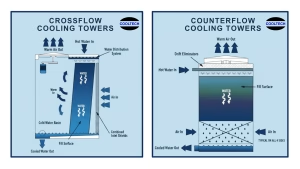
- Crossflow Cooling Towers: In a crossflow architecture, hot process water is flowed vertically downward over the fill media while air is blown horizontally across the falling water. Routine maintenance of the hot water distribution basins is easily allowed by this design without a complete system shutdown being required.
- Counterflow Towers: Air is directed vertically upward by counterflow models, in direct opposition to the downward flow of the process water. While exceptional thermal transfer is offered, pressurized plastic spray nozzles are required by them, which demand more intense maintenance protocols.
Read this blog on Types of Cooling Towers for more information.
Types of Chillers
Chillers are broadly categorized by how the extracted heat is rejected.
- Air-Cooled Chillers: Ambient air drawn by mechanical fans directly across condenser coils is utilized by these units to reject heat. They are favored by facilities where the complexities of water treatment are wished to be avoided.
- Water-Cooled Chillers: Designed for maximum capacity, a secondary water loop is used by these chillers to reject heat. The pinnacle of large-scale cooling efficiency is represented by them, but a more complex infrastructure is required.
Conclusion
When a choice is being made between a chiller and a cooling tower, it is not simply a matter of which technology is objectively superior. Rather, it must be decided which system is perfectly aligned with your specific thermodynamic requirements.
If ultra-precise, sub-ambient cooling is demanded by your facility, the mechanical reliability of a chiller is generally required. Alternatively, if vast quantities of low-grade heat need to be rejected, cooling towers will be found to be unmatched in their economical scale.
Before a major mechanical installation is proceeded with, your operational needs must be thoroughly evaluated. If professional guidance and expert layout designs are needed by you, please contact Cooltech Engineers for cooling towers today.